
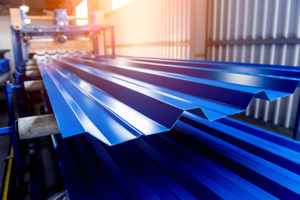
Sheet Metal
The most important sheet metal material properties include strength, ductility, formability, hardness, corrosion resistance, weldability, and machinability. These properties determine the suitability of a metal for specific forming processes and end applications.
Key Sheet Metal Properties
- Strength: Refers to the ability to withstand mechanical forces; higher strength is often needed for structural parts and load-bearing components.
- Ductility/Malleability: Indicates how easily a material can be stretched or formed without cracking; essential for complex bending and shaping tasks.
- Formability: The ease with which sheet metal can be modified into the desired shape via processes like stamping and drawing; closely related to ductility.
- Hardness: Describes resistance to indentation and wear, important for surface durability and longevity.
- Corrosion Resistance: Metals such as aluminum and stainless steel have good corrosion resistance and are chosen for environments with moisture or chemicals.
- Weldability: Determines how readily material can be joined through welding processes; mild steel, for instance, welds easily.
- Machinability: Indicates how easy it is to cut, drill, or machine the metal, impacting manufacturing speed and quality.
- Elasticity: Impacts the ability of the sheet metal to return to its original shape after deformation, relevant in applications needing spring-like behavior.
- Impact Resistance: Important for automotive and aerospace parts that need to withstand shocks and sudden forces.
Selecting the right combination of these properties ensures that sheet metal meets the requirements for durability, appearance, manufacturing efficiency, and cost in its intended application.
Important thermal properties of sheet metal materials include thermal conductivity, specific heat capacity, thermal expansion, and thermal diffusivity.
Key Thermal Properties
- Thermal Conductivity: Measures how efficiently heat passes through the material; high conductivity metals like aluminum (about 225 W/m·K) transfer heat quickly, while steels have much lower values.
- Specific Heat Capacity: Indicates the amount of heat energy required to raise the temperature of a unit mass by one degree; affects how rapidly sheet metal heats or cools during processes.
- Thermal Expansion: Describes how much the metal expands or contracts with temperature changes, impacting dimensional stability and assembly tolerances.
- Thermal Diffusivity: Relates to how quickly a material responds to changes in temperature, important for rapid heating or cooling cycles.
These properties are critical in applications involving heat transfer, such as automotive panels, electronic enclosures, and HVAC components, and they influence manufacturing steps like welding, cutting, and forming.
The important electrical properties of sheet metal materials include electrical conductivity, electrical resistivity, and magnetic permeability.
Key Electrical Properties
- Electrical Conductivity: Measures a material’s ability to conduct electric current; metals like copper and aluminum have high conductivity, while steel has lower conductivity (used for structural applications).
- Electrical Resistivity: The inverse of conductivity; higher resistivity means less current flow. Stainless steels and electrical steel have moderate to high resistivity, which is useful in transformer and motor cores to reduce eddy current losses.
- Magnetic Permeability: Indicates the ability of a material to support magnetic flux. Electrical steels are engineered for high magnetic permeability, critical in efficient electromagnetic applications like transformers and electric motors.
- Core Loss and Magnetostriction: Especially important for electrical steels used in AC magnetic circuit applications, as they determine energy losses and stability under magnetic fields.
Selecting sheet metal with proper electrical properties ensures efficient performance in electrical enclosures, connectors, transformers, motors, and other electromagnetic applications.